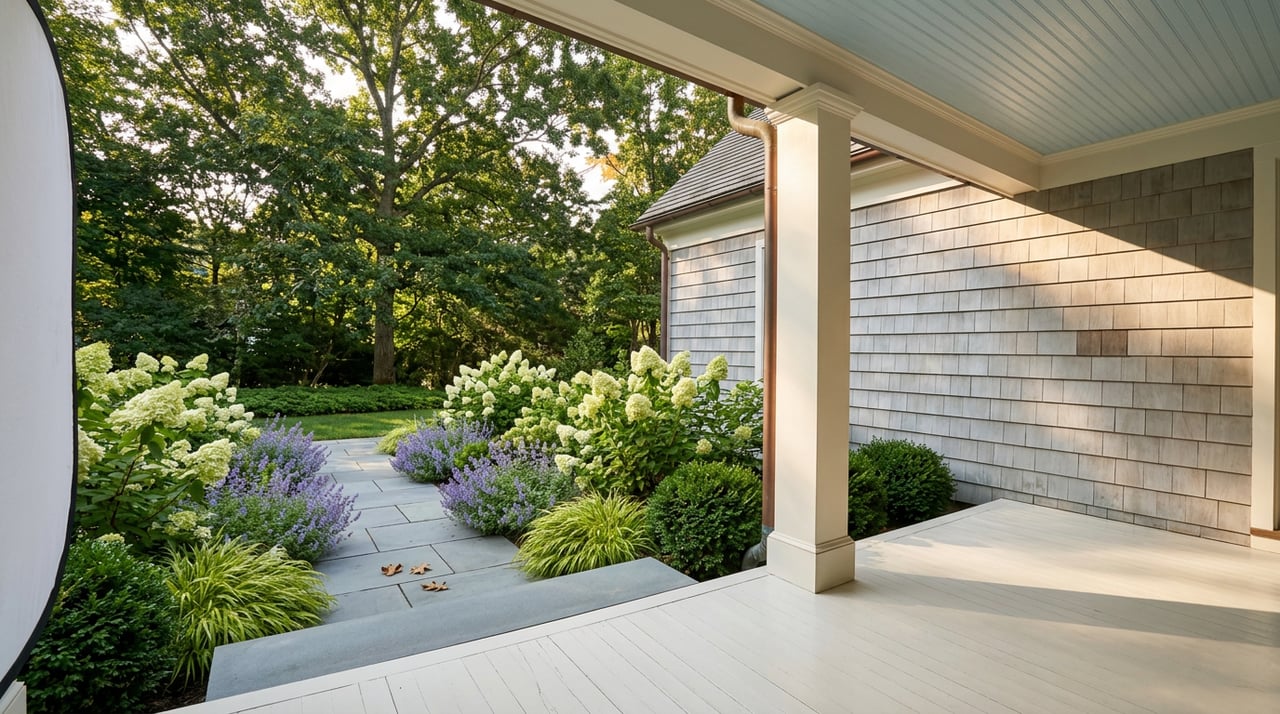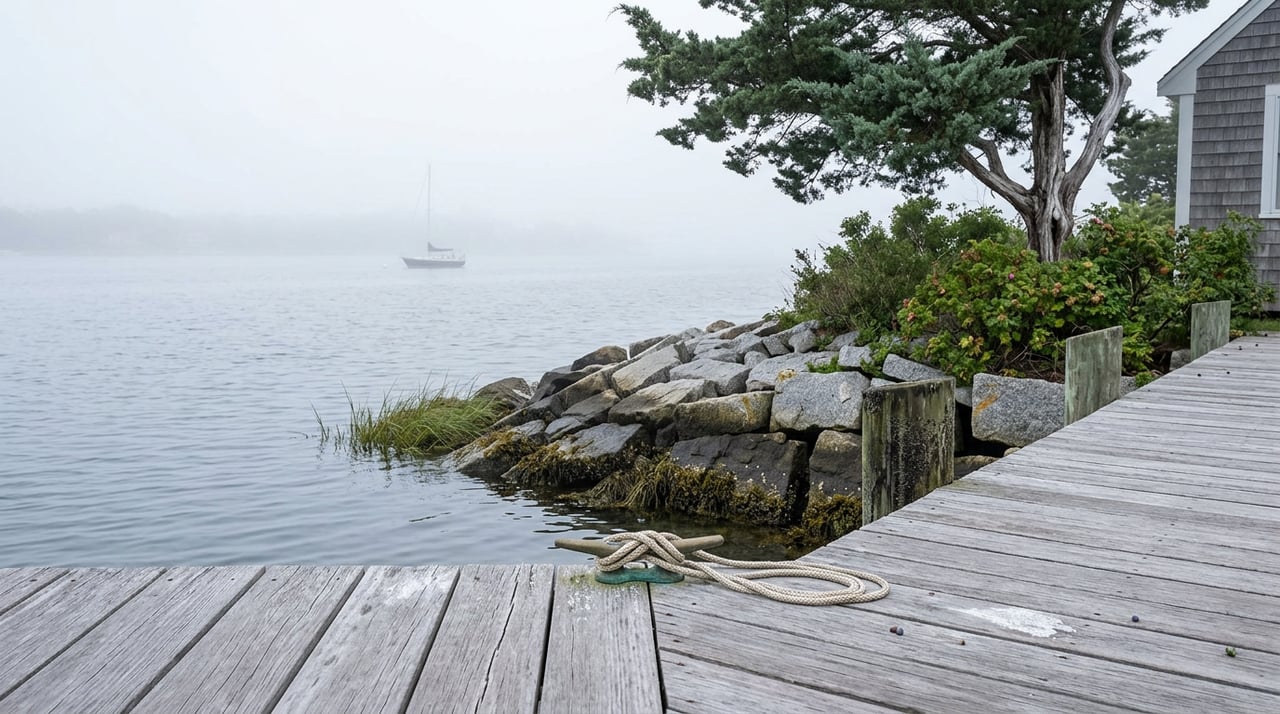
Two listings a half mile apart can both say "waterfront" in Rowayton and mean entirely different things. One comes with a private dock reaching to deep water on the Five Mile River. The other offers a water view, a walk to Bailey Beach, and deeded rights to a shared beach association, no dock at all. The photos look similar. The value proposition is not.
That distinction rarely shows up until a buyer is under contract and starts asking the second round of questions: is this dock actually permitted, does it transfer with the house, and how long would it take to replace or repair it. By then the inspection contingency clock is running, and the answers are not always what the listing implied.
The Dock in the Photos Isn't a Fixed Asset
A private dock on Connecticut's tidal waters is not simply a structure that comes with the house the way a garage or a finished basement does. It exists because the state issued a permit allowing a specific encroachment into public trust waters, land that belongs to Connecticut's citizens under a legal doctrine older than the house itself. The Connecticut Department of Energy and Environmental Protection regulates that encroachment, and its own guidance is direct about the limits: a waterfront owner gets one point of access per property, and that access must be sized and located to avoid conflicting with a neighbor's equivalent right.
What that means practically: the dock you see in the listing photos is authorized to that specific configuration, for that specific parcel, under a permit that may or may not still be in good standing. Buying the house does not automatically hand you a clean slate to rebuild, extend, or add a boat lift. It hands you whatever the existing permit allows, plus whatever paperwork trail proves that permit exists.
Rowayton's water access also isn't uniform across the village, and that variation changes what you're actually purchasing.
| Sub-market | Typical water access | What it means for a buyer |
|---|---|---|
| Wilson Point | Private docks common; Norwalk Yacht Club maintains a mooring field of more than 100 boats in Wilson Cove | Larger lots, deep-water access, higher carrying and maintenance cost |
| Bell Island | Private beach community with sound and island views | Water proximity, but dock access is limited to none for most parcels |
| Village center, near the Five Mile River | Mix of private docks and Rowayton Yacht Club moorings | Walkable to Pinkney Park and the train, boating access varies house to house |
| Areas near Wee Burn | Beach club membership (pool, tennis, dining) rather than boat infrastructure | Water lifestyle without the dock, permit, or insurance complexity |
None of these access types are better or worse. They are priced differently, insured differently, and maintained differently, and a listing that simply says "waterfront" doesn't tell you which column you're in.
Permits Follow the Work, Not the Deed
If the dock needs anything beyond routine maintenance after closing, repair, replacement, or a modest resizing, the timeline depends on which permit path it falls under. DEEP's general permit process, which covers small, low-impact residential docks that meet standard criteria, is typically decided within about 90 days once a complete application is submitted. That is the fast lane, and most straightforward projects qualify.
Anything more involved, a larger structure, a location near a federal navigation channel, or a design that departs from the standard template, requires an individual Structures, Dredging and Fill permit. That process includes public notice and can involve a formal hearing, and it commonly stretches well beyond the general permit timeline. DEEP's own standard for "reasonable access" gives a sense of how modest the baseline is: in most cases, a four-foot-wide fixed pier to mean low water, a ramp, and a 100-square-foot float is what the state considers sufficient, regardless of what size boat you actually own.
That baseline matters if you're picturing something larger once you own the house. A buyer who assumes any dock upgrade is a quick contractor call is planning around the wrong calendar.
The Insurance Clock Nobody Mentions at the Open House
Rowayton's cove-side parcels along the Five Mile River and Wilson Cove sit inside Norwalk's mapped Special Flood Hazard Area, the zone the city and FEMA use to determine which properties require flood insurance and which building standards apply. If your mortgage is federally backed, a policy through the National Flood Insurance Program isn't optional, and new NFIP policies carry a standard waiting period before coverage takes effect.
That waiting period is the part that catches people off guard. If you're racing toward a closing date and haven't bound a flood policy early, you can find yourself unable to close on the exact day you planned, not because of anything wrong with the house, but because federal flood coverage doesn't turn on overnight. The fix is simple once you know to look for it: get the flood zone determination and a quote the same week you go under contract, not the week before closing.
Why Rowayton Waterfront Moves at Its Own Pace
Across Norwalk overall, homes have been selling in about 25 days on average for the three months ending in May 2026. Rowayton's water-view segment moves on a noticeably different clock, with homes typically taking closer to 50 days to sell. The village's average waterfront sale price over the trailing twelve months sits at roughly $2.4 million, up about 18 percent from the prior year, and the small handful of homes currently marketed as true waterfront carry a median asking price near $2.2 million as of mid-August 2026.
The gap in days on market isn't really about price resistance. It's the extra layer of due diligence these transactions require. Buyers and their attorneys are pulling permit histories, confirming littoral rights language in the deed, and coordinating flood insurance timing alongside the usual inspection and financing contingencies. That's real work, and it takes real time, which is exactly why a well-prepared listing, one with the dock's permit documentation and flood zone determination assembled before it hits the market, tends to move with more confidence than one that leaves buyers to discover these questions on their own.
What to Verify Before You Waive the Contingency
Before removing any contingency on a Rowayton waterfront purchase, it's worth confirming a short list directly, not assuming the listing agent's description covers it:
- Whether the dock has a current DEEP permit and, if applicable, an Army Corps authorization, and whether copies are available for your attorney's review
- Whether the property's water access is a private dock, a mooring through a club like the Rowayton Yacht Club or Norwalk Yacht Club at Wilson Point, or deeded beach rights through an association
- The property's FEMA flood zone designation and a same-week flood insurance quote, so the NFIP waiting period doesn't collide with your closing date
- Whether any planned dock work would qualify for the faster general permit path or would require the longer individual permit process
None of this changes whether Rowayton is the right village for you. It changes whether the specific house you're buying delivers the water access you think you're paying for.
A Short FAQ
Does a private dock automatically transfer when I buy a Rowayton waterfront home? The physical structure conveys with the property, but its legal standing does not come from the deed. It comes from a state permit. Ask for documentation showing the dock is currently authorized before you waive your contingency.
How long would it take to add or resize a dock after I close? If the project fits DEEP's standard template for a small residential dock, expect a decision in roughly 90 days once your application is complete. Anything larger or more complex requires an individual permit with public notice, which takes considerably longer.
I'm paying cash. Do I still need to worry about the flood insurance waiting period? There's no lender forcing your hand, but going without coverage during a gap leaves you exposed, and most owners in Rowayton's flood zone carry a policy regardless of financing. If you ever refinance with a federally backed loan, coverage becomes mandatory anyway.
Does every Rowayton waterfront home come with a dock? No. Some carry deeded beach rights or club membership access instead, through associations like Wee Burn or Roton Point. That distinction changes both the carrying cost and the resale story, so it's worth confirming early rather than assuming.
Rowayton rewards buyers who ask the right questions before they fall for the view. If you're evaluating a waterfront property here, or trying to understand which sub-market actually fits how you want to live on the water, Maureen Sullivan can walk through the permit history, flood zone status, and access type on any listing you're considering. Let's connect.