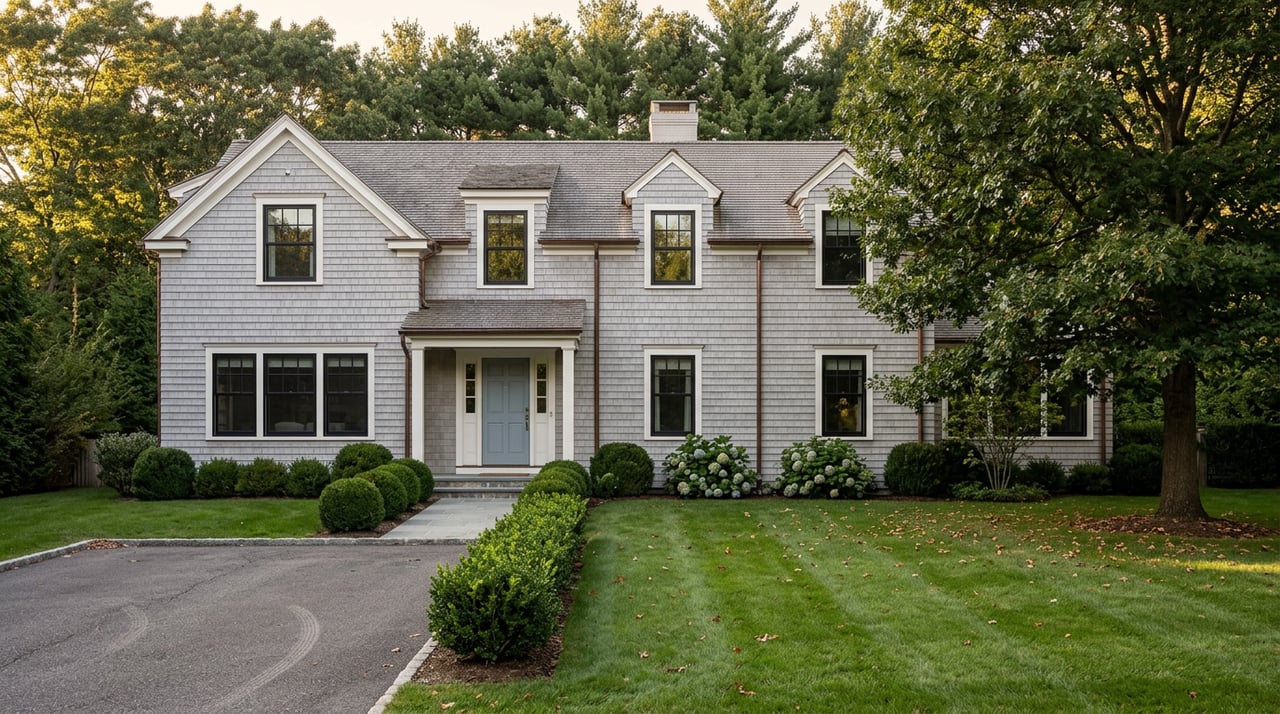
Picture two buyers with the same $700,000 pre-approval, both told to "look at Norwalk." One walks into a two-bedroom loft near Washington Street with exposed brick and a parking spot she has to pay extra for. The other tours a four-bedroom colonial on a wooded acre with a detached garage and a swing set left behind by the previous owners. Both are shopping Norwalk. Neither is shopping the same market.
That gap is not a coincidence or a fluke listing. It's the mechanism hiding inside every citywide median price you'll see quoted for this city, and understanding it changes how you should actually search.
The Number on the Portal Only Describes an Average
Over the three months ending in July 2026, Norwalk's median sale price sat at $758,000, with homes averaging six offers and going under contract in about 27 days. Back in April 2026, the citywide median was reported closer to $634,950, moving in an average of 23 days. Whichever snapshot you catch, the headline number moved by more than $100,000 in a few months, which is itself a clue. A median that swings that fast across a single city isn't describing one steady market. It's describing several markets shoved into one average, and the mix of what sold that month determines where the needle lands.
Here is what actually makes up that blend, based on the property types and price bands each Norwalk submarket has been trading in through 2026:
| Submarket | What's for sale | Rough price band |
|---|---|---|
| SoNo (South Norwalk, around Washington Street) | Condos and converted lofts | Low to mid $400,000s |
| East Norwalk | Single-family homes and low-rise condos near the water | Mid $500,000s to $700,000s |
| Cranbury / West Norwalk | Detached colonials and mid-century homes on larger lots | $700,000s to $950,000+ |
| Rowayton (6th Taxing District) | Waterfront single-family homes | Well above $1.5 million, with some properties reaching $5 million+ |
A buyer comparing "the Norwalk median" to Westport or Darien is really comparing an average of a $450,000 condo and a $1.5 million waterfront estate to those towns' more uniform inventory. The comparison isn't wrong, but it's answering a question nobody asked. The real question is which of these five Norwalk submarkets fits your budget and your search, because the citywide number won't tell you that.
What Happens When the Sample Gets Small
Once you start looking at submarkets instead of the city as a whole, a second problem shows up: small numbers move fast, and they move in ways that look dramatic but mean less than they appear to.
South Norwalk is the clearest example. In the three months ending July 2026, its median sale price was reported at $723,000, up 119.2 percent from the same period a year earlier. That is not a typo, and it is not evidence that South Norwalk condos suddenly doubled in value. Only 25 homes sold there in July 2026, while the median above covers the three months ending in July. A monthly sales count is not the full sample behind that three-month figure; a mix of property types and a small number of sales can make a median swing sharply.
Cranbury tells a version of the same story from the other direction, and even faster. In May 2026, Cranbury's median sale price across all home types was up 24.7 percent year over year to $874,706. Two months later, Redfin's Cranbury page showed the average house price down 36.3 percent year over year. The same neighborhood flipped from a double-digit gain to a double-digit loss within a single summer. That isn't a contradiction in the data. It's what happens when a handful of very different sales, a cul-de-sac colonial here, a smaller starter home there, land in the same small pool and get averaged together.
If a Norwalk submarket's year-over-year number looks shocking, check how many homes actually sold that month before you believe it.
This matters if you're using neighborhood-level data to negotiate or to time an offer. A 119 percent jump or a 36 percent drop in a submarket with relatively few sales tells you almost nothing about where prices are actually headed. It tells you the sample was small enough for a few unusual transactions to dominate the math.
Cranbury and West Norwalk Are Where the City Median Comes From
Strip out the statistical noise and Cranbury and West Norwalk are where Norwalk's more conventional single-family market actually lives. These inland neighborhoods offer detached colonials and mid-century homes on larger lots, and they're anchored by Cranbury Park, a roughly 190-acre green space with wooded trails, open fields, and the preserved Gallaher Mansion. For a buyer who wants a yard, a garage, and a quieter block within a reasonable drive of a train station, this is the part of Norwalk that behaves most like a traditional suburb, and it's priced accordingly at the higher end of the city's single-family range.
The Beach Changes the Calculation in East Norwalk
East Norwalk sits at a different intersection of price and lifestyle. It has its own Metro-North stop, a relaxed residential feel, and direct proximity to Calf Pasture Beach, a 70-acre municipal park with a sand beach, paddleboat rentals, and a fishing pier on Long Island Sound, along with Veterans Memorial Park nearby. Homes here run more moderate than Cranbury's larger colonials, generally in the mid $500,000s to $700,000s, which makes East Norwalk the neighborhood where a buyer can get walkable beach access without paying Rowayton's waterfront premium.
SoNo Isn't Competing for the Same Buyer at All
South Norwalk's arts and dining district around Washington Street, anchored by the SoNo Collection and a growing restaurant and gallery scene, draws a buyer who isn't shopping against Cranbury or East Norwalk at all. This is a buyer prioritizing walkable density, a short walk to a train platform, and a lock-and-leave lifestyle over a lawn and a school district calculation. The condos and converted lofts that make up most of SoNo's inventory sit in the low to mid $400,000s, which is the main reason the citywide median gets pulled downward whenever a heavier share of a given month's sales comes from this pocket of the city.
Rowayton Is Barely Part of Norwalk's Market at All
Rowayton is technically Norwalk's 6th Taxing District, but it functions as its own market. There are roughly 1,800 homes total in the district, and that scarcity, combined with direct waterfront access, is what pushes prices well above $1.5 million and, for the right property, past $5 million. A buyer cross-shopping Rowayton against the rest of Norwalk is really cross-shopping it against Darien or Westport waterfront, not against Cranbury colonials fifteen minutes inland. Folding Rowayton's numbers into a single "Norwalk median" is a little like averaging a downtown condo market with a private island.
What This Means If You're Actually Comparing Norwalk to Westport or Darien
The useful question was never "can I afford Norwalk." It's "which Norwalk am I actually shopping, and does its price band match what I want." A buyer priced out of Darien might find real single-family value in Cranbury or West Norwalk. A buyer who wants beach mornings without a waterfront premium should be looking at East Norwalk, home to seasonal draws like the Norwalk Oyster Festival and within reach of the Norwalk River Valley Trail as it continues to link the city to towns inland. A buyer chasing walkability wants SoNo. And a buyer who wants Rowayton should expect to be shopping against Darien and Westport pricing, not against the rest of Norwalk.
Once you know which submarket you're actually in, the citywide median stops being useful and the neighborhood-level number becomes the one worth trusting, with the caveat that small monthly samples can still swing hard in either direction.
A Short FAQ
Is Norwalk cheaper than Westport or Darien? For SoNo condos and East Norwalk single-family homes, generally yes. For Rowayton waterfront, the comparison flips, and pricing runs closer to what you'd see in Darien or Westport's own waterfront pockets.
Which Norwalk neighborhood moves fastest? Across the city as a whole, homes have been averaging around 27 days on market over the three months ending July 2026, with roughly six offers per listing. Individual submarkets can move faster or slower depending on how many homes are actually for sale that month.
Why do submarket price swings look so dramatic? Small sample sizes. When a neighborhood like South Norwalk or Cranbury sees only a couple dozen sales in a given month, a few unusual transactions can push year-over-year comparisons up or down by double digits without reflecting a real shift in value.
If you're trying to figure out which version of Norwalk actually fits your search, or how it stacks up against Darien, Rowayton, or Westport for your specific budget, that's exactly the kind of comparison worth working through with someone who tracks these submarkets month to month. Maureen Sullivan would love to help you find the right one. Let's Connect.