If you are drawn to Rowayton, this is often the question that shapes everything else: do you want to wake up near the water, or do you want to step into the middle of village life? Both options offer the same strong Rowayton identity, but they create very different daily routines. This guide will help you compare waterfront and village-center living in Rowayton so you can choose the setting that fits the way you actually want to live. Let’s dive in.
Why Rowayton Feels Distinct
Rowayton is a coastal village within Norwalk, but it feels more self-contained than many suburban neighborhoods. The Sixth Taxing District maintains important shared assets including Bayley Beach, Pinkney Park, the Rowayton Community Center, the Rowayton Arts Center, and the train station and parking lot, while also funding the Rowayton Library and Fire Department.
That structure shapes daily life in a real way. The Rowayton Civic Association also adds seasonal sports, arts, service programming, PorchFest, fireworks, and a free summer music festival on the waterfront. For you as a buyer, that means the decision is not only about the house itself. It is also about how close you want to be to shoreline routines, village gathering spots, and community events.
What Waterfront Living Looks Like
Waterfront living in Rowayton usually means direct proximity to Long Island Sound or the Five Mile River. These homes tend to feel more shoreline-specific than inland properties, with features that can include raised shingle-style designs, cobblestone drives, private moorings, and wooden docks.
The housing stock also has its own character. Some waterfront homes date to the early 1900s, while others are much newer. In many cases, the setting is the headline feature, with water views and outdoor spaces playing a central role in how the home is used.
Waterfront Lifestyle Benefits
If you picture summer as a daily lifestyle rather than a short season, waterfront living may feel like the natural fit. Bayley Beach is residents-only and includes lifeguards from Memorial Day to Labor Day, along with a playground, basketball and volleyball areas, showers, a pavilion, picnic tables, and barbecue space.
The broader community calendar reinforces that seasonal rhythm. Events like PorchFest, July 4 fireworks, and the summer music series on the waterfront can make this side of Rowayton feel especially vibrant in warmer months. For many buyers, that emotional pull is a big part of the appeal.
Waterfront Costs and Due Diligence
The tradeoff is that waterfront buying usually comes with more complexity. Rowayton is firmly a premium market, with recent market snapshots showing multi-million-dollar pricing across sources, including median figures ranging from about $2.17 million to $2.86 million depending on methodology.
Closer-to-the-Sound properties may also face greater flood exposure. Norwalk notes that flood hazard zones carry special regulations and flood insurance requirements, and CT DEEP and FEMA note that flood insurance is mandatory for mortgages on structures in FEMA Special Flood Hazard Areas. If you are considering a waterfront home, flood-zone status, insurance costs, and shoreline-specific maintenance should be part of your first-round review, not an afterthought.
What Village-Center Living Looks Like
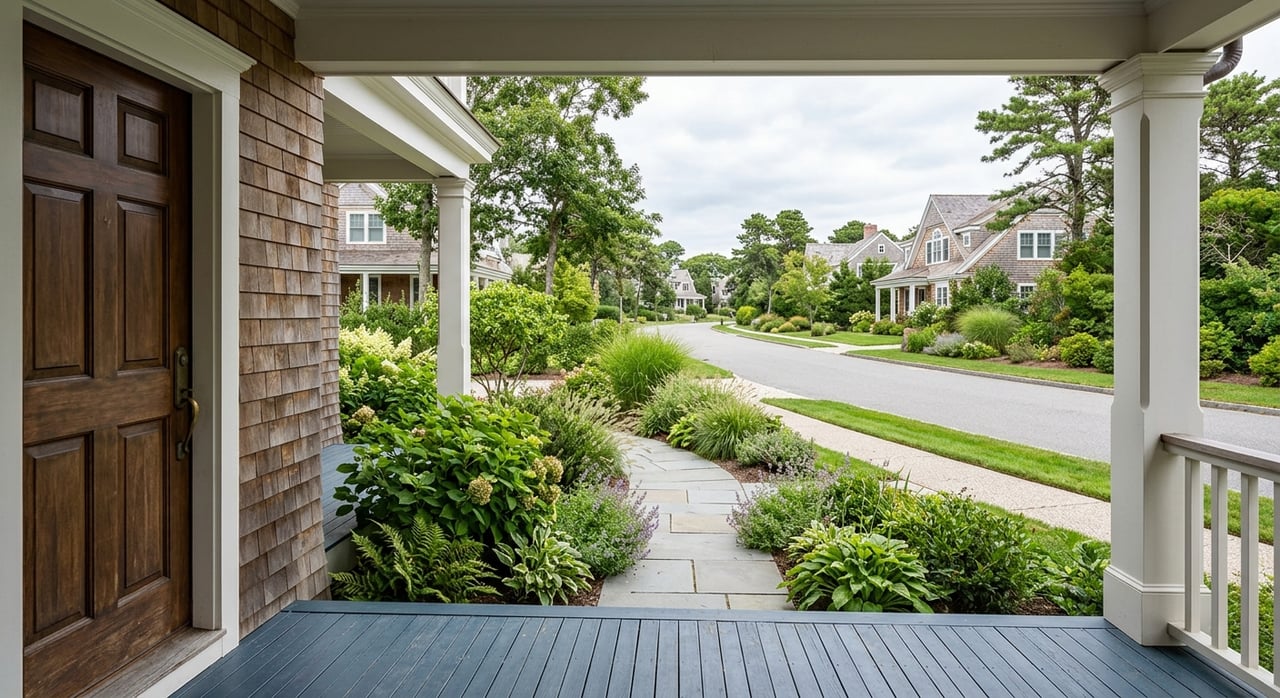
Village-center Rowayton still gives you the coastal feel, but with a different daily rhythm. Housing here tends to include 1950s to 1970s inland homes, quarter-acre Cape Cod cottages, and older Queen Anne-style homes closer to the core.
Compared with the waterfront, the setting is typically more about tree-lined residential streets and easier access to everyday destinations. You may give up direct water access or expansive views, but you gain a version of Rowayton that can feel simpler and more connected to the village center.
Village-Center Convenience
For many buyers, the biggest advantage is convenience. The village core sits closest to places residents use often, including the Community Center, library, arts center, Pinkney Park, neighborhood restaurants, and recurring local events.
That can make your week feel easier and more spontaneous. Instead of planning around drives and parking, you may be able to build more of your routine around nearby destinations and community touchpoints.
Walkability and Train Access
Walkability is one of the clearest practical differences between the two options. Walk Score rates the overall Rowayton neighborhood at 34 out of 100, which is car-dependent, but a central address like 214 Rowayton Avenue scores 53 out of 100 and sits about a nine-minute walk from the Rowayton train stop.
That said, convenience is not automatic. The Sixth Taxing District operates the station parking lots, which total 330 spaces, but permit parking has a waitlist and daily parking is separate. If commuting matters to you, it is worth confirming not just map distance, but also the real parking and walking experience tied to a specific address.
Waterfront vs Village Living at a Glance
Choosing between these two lifestyles is usually less about right or wrong and more about what you want your average Tuesday to feel like. Here is a simple way to frame it:
| If you value... | Waterfront may fit better | Village center may fit better |
|---|---|---|
| Daily setting | Direct water proximity and views | Residential streets near village amenities |
| Summer rhythm | Beach, boating, outdoor entertaining | Events, parks, restaurants, and easy pop-ins |
| Home style | More shoreline-specific homes | Inland homes, cottages, and older village houses |
| Daily routine | Destination-style living | More convenience-focused living |
| Extra diligence | Higher need for flood and insurance review | Lower shoreline-related friction |
How To Decide Based on Your Routine
The best Rowayton choice is usually the one that matches your weekly rhythm, not just the one that looks best in photos. A waterfront home can be incredibly rewarding if water views, boating, beach routines, and outdoor entertaining are central to how you want to live.
Village-center living may be the stronger fit if you want easier access to shops, restaurants, community programming, and the train. In a market like Rowayton, convenience can be just as valuable as scenery, especially if you want your home to support a lower-friction day-to-day lifestyle.
Questions To Ask Yourself
Before you narrow your search, ask yourself:
- Do you want daily water views, or would you rather be closer to the center of activity?
- How often would you realistically use beach access, boating features, or waterfront outdoor space?
- How important is walkability to restaurants, parks, and community spots?
- Will train access be part of your weekly routine?
- Are you comfortable with added flood, insurance, and maintenance due diligence?
These questions can quickly clarify what matters most. In Rowayton, the emotional appeal of the setting is important, but the practical side of living there matters just as much.
What To Verify Before You Buy
No matter which side of Rowayton draws you in, details matter. Address alone does not always tell the full story because access and parking can be shaped by district rules and location-specific factors.
Before touring seriously, make sure you confirm:
- Flood-zone status
- Flood insurance requirements and estimated costs
- Beach or association access rules
- Train station parking realities
- Real walking distance to the village core or station
- How the home’s setting supports your day-to-day routine
This is where local guidance becomes especially valuable. In a market with a strong community structure and meaningful address-by-address differences, small details can have a big impact on your experience after closing.
If you are weighing waterfront versus village living in Rowayton, the right answer is usually the one that supports how you want to spend your time, move through your week, and enjoy the village year-round. If you want help comparing specific homes, neighborhoods, and lifestyle tradeoffs, Maureen Sullivan can help you navigate Rowayton with local insight and a clear strategy.
FAQs
What is the difference between waterfront and village-center living in Rowayton?
- Waterfront living usually offers direct proximity to Long Island Sound or the Five Mile River, while village-center living focuses more on convenience, walkability to local amenities, and easier access to community destinations.
Is Rowayton walkable for buyers who want village convenience?
- Rowayton overall is considered car-dependent, but some addresses in the village core are more walkable and can be within about a nine-minute walk of the Rowayton train stop.
What should buyers know about flood risk in Rowayton waterfront homes?
- Homes closer to the Sound may have greater flood exposure, and properties in FEMA Special Flood Hazard Areas may require flood insurance for financed purchases.
Are Rowayton waterfront homes and village homes priced very differently?
- Rowayton is a premium market overall, and while village-center living may be the more practical choice for some buyers, the decision is usually more about lifestyle and convenience than finding a low-cost section of town.
What amenities are important to know about when buying in Rowayton?
- Buyers should pay attention to access to Bayley Beach, Pinkney Park, the Community Center, the library, the arts center, the train station, and district-managed parking because these features shape daily life in Rowayton.
What should buyers verify before choosing a Rowayton home?
- Buyers should confirm flood-zone status, insurance costs, beach or association access rules, parking conditions, and the real walking distance from the home to the station and village amenities.